


The Autocratic Leadership is one in which the Leader makes all decisions and exercises strict control over subordinates. The Autocratic Leader dictates policies and procedures, decides on objectives and guidelines, and expects employees to follow his or her instructions without question or input.

Transformational Leadership is a type of leadership wherein a leader works with subordinates to pinpoint necessary changes, creates a vision to guide the change through inspiration, and enacts the change in tandem with his subordinates. This type of leadership often serves to enhance the motivation, morale, and performance of collaborators.

The Transactional Leader has a management style that is based on a series of exchanges between the leader and his subordinates. It focuses on specific transactions, where subordinates are rewarded or punished based on their performance.
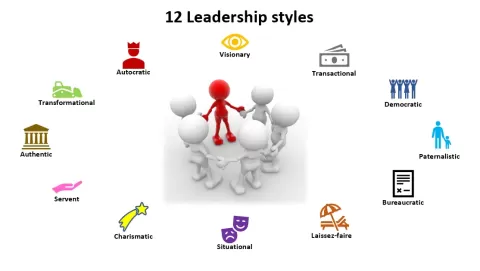
There are several theories and Leadership styles that are commonly used and studied in the leadership field. Nowadays, here are some of the main leadership styles widely recognized and the situations in which they are best.

Introduction Leadership is a key concept in understanding the dynamics of an organization and a determining factor in its success. Since the first observations of this phenomenon, scientists have continually sought to define its boundaries and establish explanatory models. This article aims to explore the history of leadership studies, examine existing leadership models, and discuss their application in business.

Lean Engineering, is an approach based on the concept of Lean management, which aims to minimize waste and maximize productivity in operations management. In the context of engineering or R&D, this means optimizing design and project delivery processes to be more efficient, while ensuring quality and meeting deadlines and budgets.

Measuring performance is at the heart of corporate management. Two main types of indicators are used for this purpose: leading indicators and lagging indicators.It is important to understand the difference between the two types, but above all how the complementary use of the two is at the heart of effective company management.
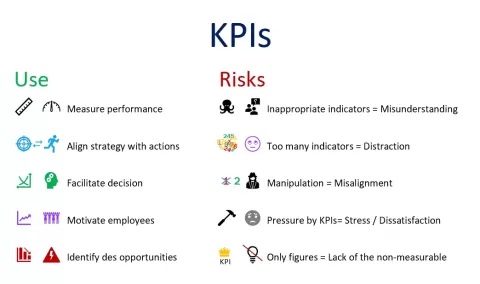
KPI meaning is Key Performance Indicator. It is a quantitative measure used to assess the effectiveness of an organisation, department, project or individual in achieving key objectives. Key Performance Indicators provide an overview of performance and progress towards specific objectives.

How can you have an operational and financial dashboard that is effective in steering the performance of a company, its departments, services and teams? How can we ensure that it is actually used for management purposes by the teams that produce it, and that it is not just a reporting tool?

The Balanced Scorecard (BSC) is a dashboard definition that has revolutionised the way organisations measure their performance and align their activities with their vision and strategy. The Balanced Scorecard approach aims to 'balance' performance indicators by examining business performance from four different perspectives: financial, customer, internal processes, and learning and growth.
The SMART goals method is a framework used to formulate and manage goals effectively and efficiently. The SMART acronym meaning is Specific, Measurable, Achievable, Relevant, and Time-bound.
MBO is a business management method based on the clear and precise definition of individual and collective objectives. Its meaning is Management by Objective. This approach seeks to align employee activities with overall business goals for better performance.

The Objectives and Key Results (OKR) method is a performance management framework that helps organisations define, monitor and achieve their objectives. The OKR definition consists of defining an objective, which is a clear and concise description of what the organisation wants to achieve, and key results, which are specific measures used to monitor progress towards the objective.

The RACI matrix is a tool that promotes clarity, accountability and efficiency within organisations. The acronym RACI stands for Responsible, Accountable, Consulted and Informed.
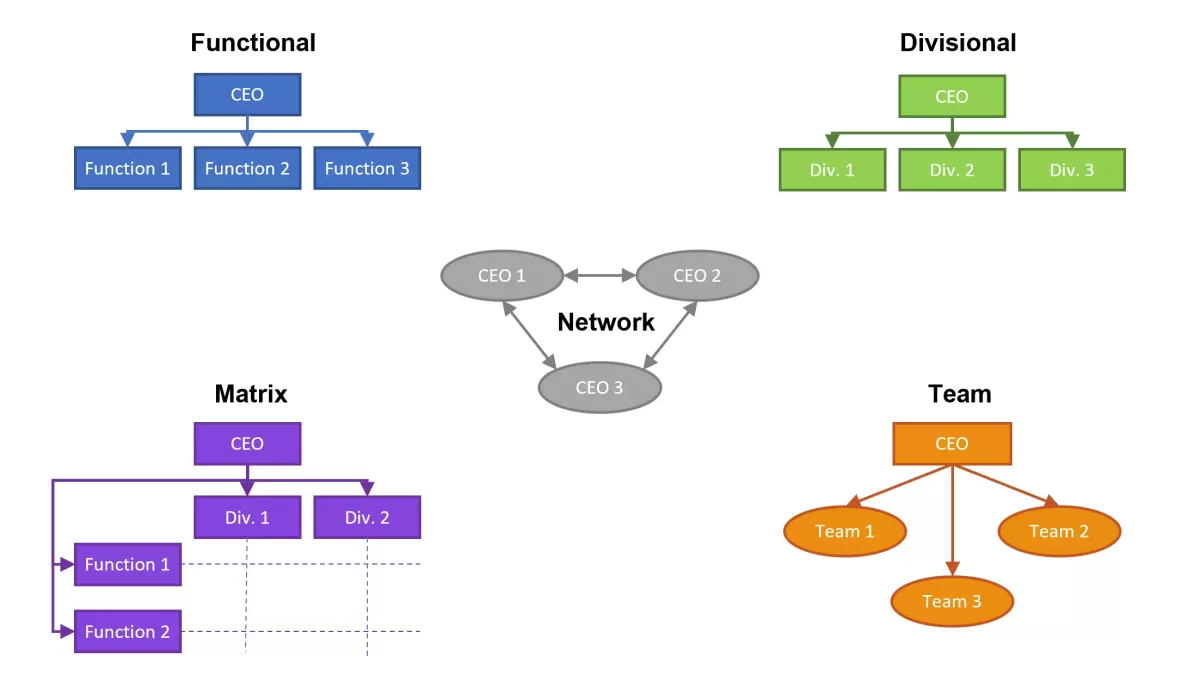
A company's organisation is a key element in its structure and operation. There are several types of organisation, each with its own characteristics, advantages and disadvantages. What are their specific features, advantages and disadvantages? Which types of organisation are best suited to different market situations?
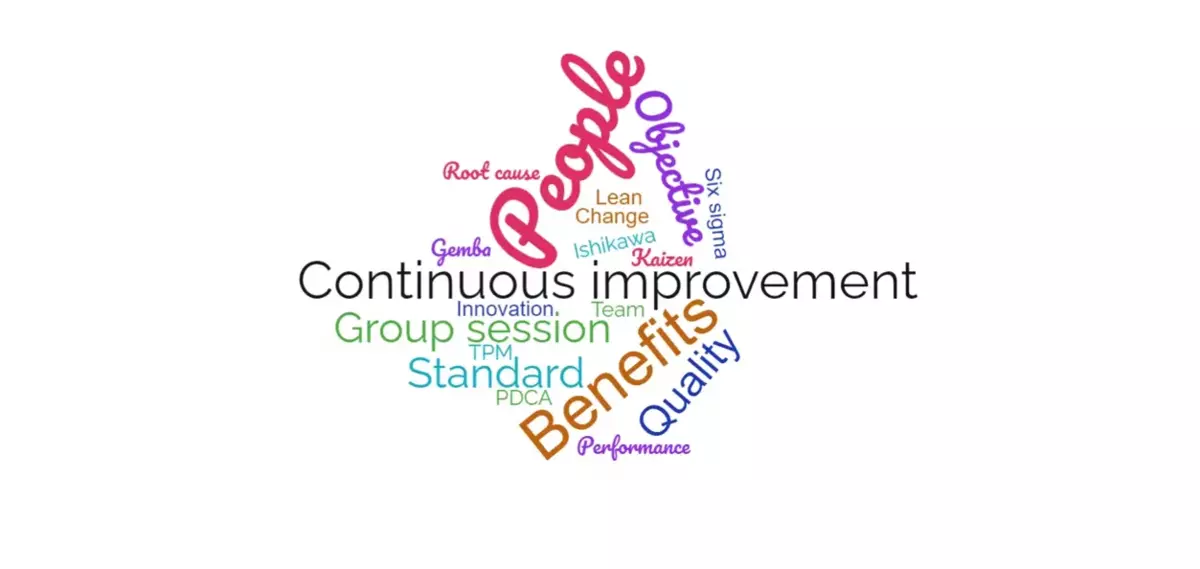
Continuous improvement is a systematic process to making continuous and incremental improvements in all aspects of the business, such as operational processes, product quality, customer satisfaction and employee engagement. The continuous improvement process focuses on identifying and eliminating waste, optimizing workflows and adopting a culture of learning and innovation.
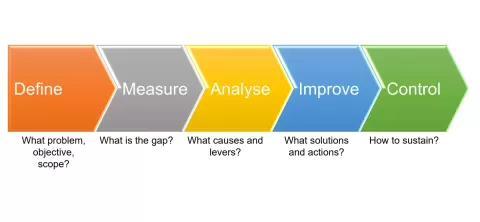
1 What is the DMAIC process? The DMAIC process is a structured continuous improvement process that aims to optimize processes and reduce variations in a business, industrial or transactional process. The acronym DMAIC stands for "Define", "Measure", "Analyze", "Improve" and "Control".
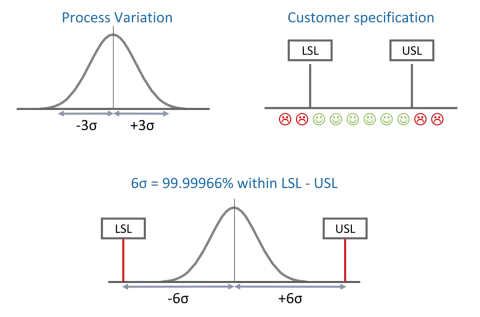
What is the Six sigma methodology The Six Sigma methodology is a methodology of continuous improvement aimed at reducing variations and defects in processes. Its objective is to achieve a high level of quality by limiting defect rates to less than 3.4 per million opportunities.
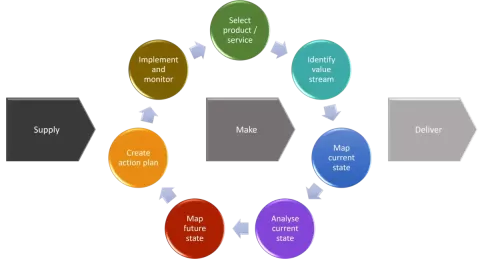
Value Stream Mapping (VSM), or value chain mapping, is a technique for visualizing and improving processes within a company. It is an essential tool that allows organizations to focus on the activities that generate the most value, eliminating inefficiencies and waste.

Lean management remains a concept frequently mentioned in the professional world. This management philosophy aims to maximize value for the customer while minimizing waste. Lean involves a culture of continuous improvement that encourages the commitment of all employees to deliver the highest possible quality by eliminating non-value added activities.